AMSTERDAM, May 13, 2026 /PRNewswire/ -- Trip.com Group opened its flagship Trip.com Airline Global Conference (AGC) 2026 in Amsterdam, convening global leaders from across the aviation and travel ecosystem to explore how technology, trust, and collaboration are redefining the future of travel.
Held at the Passenger Terminal Amsterdam, the conference brought together airline partners, airports, global distribution systems (GDS), technology companies, corporate travel leaders, and industry organisations, including International Air Transport Association (IATA), to exchange insights and co-create solutions for the next phase of industry growth.
Advancing Travel Through AI
Under the theme "Co-Creating Value: Leading the Future of Travel Through Intelligence, Trust, and Partnership," this year's AGC spotlighted how artificial intelligence (AI) is rapidly transforming travel: from inspiration and search to booking, servicing, and beyond.
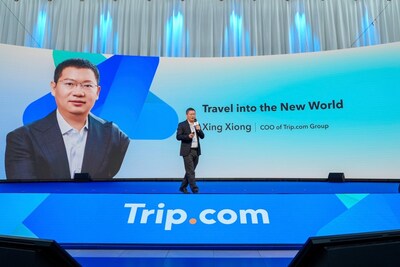
In his keynote speech "Travelling Into the New World" Mr Xing Xiong, COO of Trip.com Group, reflected on the rapid evolution of AI in recent years and its growing role in shaping the modern OTA landscape. He highlighted how Trip.com is actively integrating AI across its operations—from enhancing internal efficiency to improving customer service experiences at scale. Looking ahead, he also shared perspectives on the potential of Agentic AI and its potential to transform the aviation industry.
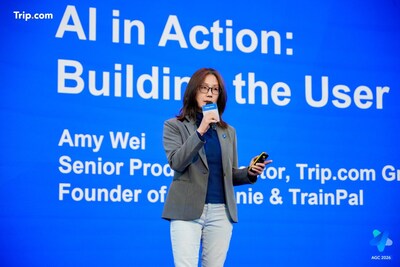
Ms Amy Wei, Senior Product Director, also highlighted real-world AI applications across the traveller experience, reducing not only effort but uncertainty. For instance, AI-powered assistants like TripGenie, which elevate personalisation and usability, to human–AI collaboration in customer service which strengthens trust at scale.
The Next Frontier of Travel: Digital Identity
As part of its ongoing innovation efforts, Trip.com Group is collaborating with the International Air Transport Association (IATA) to pilot a Customer ID digital identity initiative under the Data and Technology Strategic Partnership.
The initiative aims to explore how travellers may securely use digital identities stored in mobile wallets such as Google Wallet and Apple Wallet to autofill booking details, reducing friction and minimising errors. It represents one of the early implementations of digital identity technology within the online travel sector and reflects the broader industry shift toward more seamless, end-to-end journeys.
Such an innovation in digital identity can significantly simplify travel booking experiences by enabling travellers to share information with a single click, unlocking a new generation of more streamlined, efficient travel services.
"Digital identity is a key enabler of a more seamless travel experience. Through this pilot with Trip.com, we are exploring how secure, wallet-based credentials can simplify the booking process, reduce errors, and give travellers greater control over their data. It is an important step toward delivering more efficient, end-to-end digital journeys across the travel ecosystem," said Mr Nick Careen, IATA's Senior Vice President, Operations, Safety and Security.

Future Rollout
Trip.com Group and its partners are continuing to evaluate future development and rollout plans for the optional Customer ID functionality. Future phases may involve a subset of users in the UK and US during the initial rollout.
Participating airlines in the initiative are expected to include Air Canada, Turkish Airlines and Qatar Airways, alongside technology partner Hopae.
Global Collaboration and Key Shifts
The choice of Amsterdam as host city to the conference underscores Trip.com Group's commitment to expanding its presence in Europe.
Mr James Spalding, Regional Director for Northern Europe, Flights, emphasised the deepening collaboration with regional partners and revealed that notably, the region observed 71% growth year-on-year in international inbound bookings according to the Group's latest data.

The agenda also reflected several key shifts shaping the industry, from how airlines and airports are adapting to evolving traveller expectations and the continued influence of low-cost carriers, to the changing nature of corporate travel — including Trip.com's corporate travel offering, TripBiz. Sustainability also featured prominently as a core pillar of long-term industry development.
A Platform for Co-Creating the Future
Now in its latest edition, the Trip.com Airline Global Conference continues to serve as a key industry platform. Mr CT Ooi, Chief Executive Officer of Flights, Trip.com Group, shared that it is crucial to stay ahead by strengthening collaboration and leveraging data and technology across the ecosystem.
"In an AI-driven, interconnected travel landscape, no single player can create value alone. The next phase of airline–OTA partnerships will be defined by structured, tech-enabled collaboration, from revenue sharing to joint customer experience roadmaps. Real value will come from functional integration, demand-shaping algorithms and conversational AI, delivering measurable wins for airlines, platforms and travellers."
By convening diverse stakeholders and spotlighting emerging aviation trends, AGC 2026 aims to drive more coordinated progress toward a connected, intelligent and traveller-centric global travel ecosystem.
(end)
About Trip.com Group
Trip.com Group is a global travel service provider comprising of Trip.com, Ctrip, Skyscanner, and Qunar. Across its platforms, Trip.com Group helps travellers around the world make informed and cost-effective bookings for travel products and services and enables partners to connect their offerings with users through the aggregation of travel-related content and resources, and an advanced transaction platform consisting of apps, websites and 24/7 customer service centres. Founded in 1999 and listed on NASDAQ in 2003 and HKEX in 2021, Trip.com Group is on the mission "to pursue the perfect trip for a better world". Find out more about Trip.com Group here: group.trip.com.
Follow us on: X, Facebook, LinkedIn, and YouTube.

Photo - https://mma.prnewswire.com/media/2978766/image1.jpg
Photo - https://mma.prnewswire.com/media/2978768/image2.jpg
Photo - https://mma.prnewswire.com/media/2978765/image3.jpg
Photo - https://mma.prnewswire.com/media/2978767/image4.jpg
Logo - https://mma.prnewswire.com/media/2919909/Trip_com_Group_Logo.jpg
 View original content:https://www.prnewswire.co.uk/news-releases/ai-and-digital-identity-drive-aviations-next-chapter-tripcom-group-at-airline-global-conference-302770356.html

Europas Aktienmärkte haben die neue Woche mit Verlusten begonnen. Am Montag gaben die Leitindizes auf dem Kontinent überwiegend moderat nach. Marktteilnehmer verwiesen auf die anhaltend unklare Lage im Nahen Osten und die damit einhergehenden erneut steigenden Ölpreise, die die Stimmung belasteten. Zusätzlich drückte die Ankündigung von US-Präsident Donald Trump, die Zölle für die Autobranche in der Europäischen Union auf 25 Prozent anzuheben, vor allem auf die Kurse von Fahrzeugherstellern und deren Zulieferern.
Der EuroStoxx 50 lag zur Mittagszeit 0,7 Prozent im Minus bei 5.842 Punkten. In Frankreich gab der Cac 40 ähnlich deutlich nach, ebenso der italienische FTSE MIB. In Spanien fielen die Abschläge mit einem Minus von 1,1 Prozent noch spürbar kräftiger aus. Außerhalb der Eurozone hielten sich die Verluste dagegen in Grenzen: Der Schweizer Leitindex SMI verlor 0,4 Prozent auf 13.090 Punkte. In London ruhte der Handel aufgrund eines Feiertags, sodass von dort keine Impulse kamen.
Besonders schwach präsentierte sich der Versorgersektor. In der Branchenwertung führten Aktien des italienischen Energiekonzerns Enel die Verliererliste an und büßten 2,8 Prozent ein. Zuvor hatte Analyst Rob Pulleyn von Morgan Stanley sein Anlageurteil für Enel von „Equal-weight“ auf „Underweight“ gesenkt und das Kursziel von 9,50 auf 9,00 Euro zurückgenommen. Zwar bleibt der Analyst für europäische Versorger insgesamt positiv gestimmt, er sieht jedoch regulatorische Eingriffe in den Strommarkt als zentrales Risiko in der anstehenden Sommersaison, wenn die Gasspeicher wieder aufgefüllt werden. Das Risiko in Italien schätzt Pulleyn als besonders hoch ein, was auch die Titel von Italgas belastete, die um 1,4 Prozent nachgaben.
Unter den Autowerten standen vor allem die deutschen Hersteller unter Abgabedruck, nachdem die mögliche Anhebung der US-Zölle auf EU-Autos die Exportperspektiven der Branche eintrübte. Im EuroStoxx 50 verloren Ferrari 0,7 Prozent. Dagegen konnten Stellantis und Renault nach vorangegangenen Verlusttagen leicht zulegen. Im Bankensektor blieben die Übernahmeambitionen von Unicredit im Fokus; die Aktien der italienischen Großbank gaben im Verlauf um 0,3 Prozent nach, während Anleger die weiteren strategischen Schritte des Instituts abwarteten.



