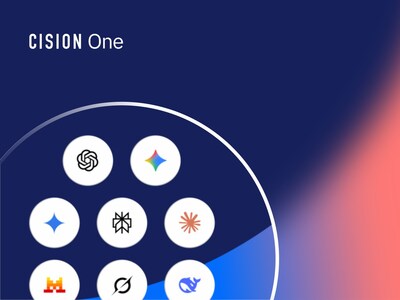
Cision's new AI Visibility Dashboard integrates signals from leading AI platforms – including ChatGPT, Gemini, and Claude – into a unified media intelligence ecosystem.
CHICAGO, July 14, 2026 /PRNewswire/ -- Cision, a global leader in consumer and media intelligence, today announced the launch of AI Visibility Dashboard in its award-winning CisionOne platform, adding LLM monitoring to its comprehensive media intelligence offerings. Powered by data from Trajaan, the industry leader in search intelligence, the new feature enables public relations and communications teams to monitor, analyze, and benchmark how their brands appear across the world's leading AI platforms.
The new dashboard brings AI visibility data into CisionOne alongside media monitoring, social listening and media outreach, giving communications teams a more complete view of how brand reputation is being shaped across traditional and emerging channels.
As audiences increasingly turn to AI tools for research, product recommendations, and daily information, AI-generated responses are becoming an increasingly important part of how brands are discovered and perceived. For today's communications teams, this creates a new visibility challenge: It is no longer enough to understand what is being said in traditional media or social platforms. Teams also need to understand how AI-generated answers represent their brand and their competitors, which sources may be influencing those answers, and which prompts or topics are driving visibility.
"AI platforms are rapidly reshaping how the world consumes information and forms opinions about brands," said Jim Daxner, Chief Product Officer at Cision. "For modern PR and comms teams, understanding your brand's footprint in AI-generated answers is no longer optional. It's essential. By bringing AI visibility data into the same environment as media monitoring and social listening, we are giving professionals the first truly unified view of modern brand reputation."
Turning Disparate Signals Into Actionable Insights
The AI Visibility Dashboard enables users to monitor brand presence across all leading LLMs, including ChatGPT, Gemini, Claude, Perplexity, Grok, DeepSeek, Google AI Overview, Google AI Mode, and Mistral.
With the AI Visibility Dashboard, communications teams can:
Unlike standalone AI tracking tools that add another disconnected dashboard to the workflow, CisionOne integrates AI visibility metrics directly alongside traditional media monitoring, social listening, and media outreach in a single platform. This additional layer gives teams insights they can act on – helping them understand how media coverage, outreach activity, social conversations, and source authority may influence AI-generated responses, while giving them a more holistic way to report on brand visibility and communications impact.
"PR teams cannot protect or grow brand reputation in a vacuum; they need to see how their earned media efforts are actually feeding the algorithms consumers trust," said Amy Jones, Chief Marketing Officer at Cision. "Introducing search intelligence into the PR workflow isn't just about tracking another channel. It's about helping communicators connect the signals between media outreach, traditional coverage, and AI visibility so they can move from data to strategic action more quickly."
The launch reflects Cision's broader strategy to help communications and marketing teams move from disconnected data to connected intelligence. By making Trajaan-powered search intelligence available across the Cision product suite, including CisionOne, Brandwatch, and PR Newswire, Cision is helping teams connect the signals that shape reputation, audience understanding, discovery, and influence. For customers, that means a clearer view of how media coverage, social conversation, search behavior, distribution, and AI generated answers work together to shape brand perception.
The AI Visibility Dashboard is available today for CisionOne users. For more information or to request a demo, visit here.
About Cision
Cision is the global leader in consumer and media intelligence, engagement, and communication solutions. We equip PR and corporate communications, marketing, and social media professionals with the tools they need to excel in today's data driven world.
Our deep expertise, exclusive data partnerships, and award-winning products, including Trajaan, Brandwatch, CisionOne, and PR Newswire, bring together signals from search, social, and media so teams can better understand what's happening, shape the conversation, and amplify their impact.
Over 75,000 companies and organizations, including 84% of the Fortune 500, rely on Cision to make better decisions and achieve their goals.
For media inquiries, please contact: Cision Public Relations at CisionPR@cision.com

Photo - https://mma.prnewswire.com/media/3005548/CisionOne_AI_Visibility.jpg
Logo - https://mma.prnewswire.com/media/3005560/cisionlogo_Logo.jpg
 View original content:https://www.prnewswire.co.uk/news-releases/cision-adds-ai-search-visibility-to-cisionone-helping-pr-teams-track-how-brands-appear-in-ai-answers-302825246.html

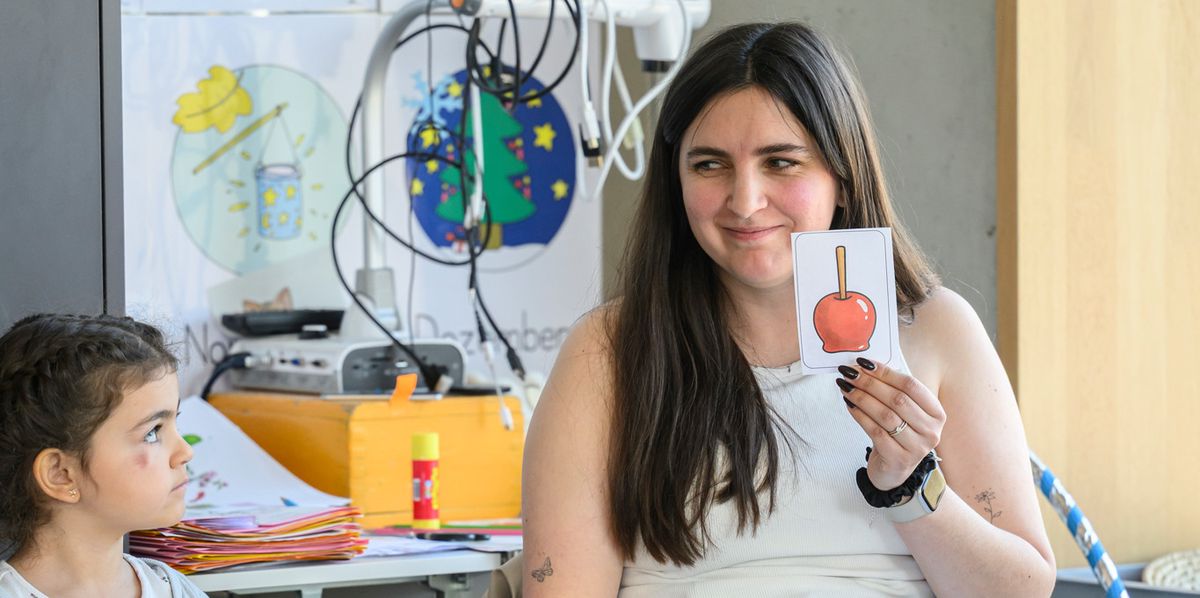
Der Bundesrat verschärft im Streit um das Frühfranzösisch den Ton und greift zu einem bundesrechtlichen Instrument. Alle Primarschülerinnen und Primarschüler in der Schweiz sollen künftig zwingend eine zweite Landessprache lernen. Um dieses Ziel durchzusetzen, hat die Landesregierung eine Revision des Sprachengesetzes in die Vernehmlassung geschickt. Sie reagiert damit auf Vorstösse in mehreren deutschsprachigen Kantonen, Französisch aus den Stundenplänen der Primarschule zu streichen.
Im Zentrum steht die Frage, welche Rolle die Landessprachen im obligatorischen Unterricht spielen sollen. Für den Bundesrat ist dies eine «Frage von nationaler Bedeutung». Die Bundesverfassung verpflichte Bund und Kantone gemeinsam, die Landessprachen zu erhalten, die Verständigung zwischen den Sprachgemeinschaften zu stärken und nationale Minderheiten zu schützen, hält die Regierung fest. Der Bund sehe sich damit in der Verantwortung, den Zusammenhalt zwischen den Sprachregionen und den Respekt vor der sprachlichen Vielfalt zu sichern, während die Kantone ihr Schulwesen so zu harmonisieren hätten, dass Qualität und Durchlässigkeit des Bildungsraums Schweiz gewahrt bleiben.
Der Konflikt entzündet sich an der 2004 beschlossenen Sprachenstrategie der Kantone, die 2009 im HarmoS-Konkordat verankert wurde. Diese sieht vor, dass Kinder in der Primarschule zwei Fremdsprachen erlernen – darunter eine zweite Landessprache. In einzelnen Kantonen gibt es inzwischen Bestrebungen, den Unterricht einer Landessprache als Fremdsprache auf der Primarstufe zu streichen. Das widerspreche der gemeinsamen Strategie, schreibt der Bundesrat und zeigt sich über diese Entwicklung «beunruhigt».
Um gegenzusteuern, legt die Regierung zwei Varianten für eine Gesetzesänderung vor. Die erste folgt dem HarmoS-Modell: In der Primarschule sollen obligatorisch zwei Fremdsprachen unterrichtet werden, eine Landessprache und Englisch. Damit würde die heutige Praxis in den 15 HarmoS-Kantonen bundesrechtlich abgesichert und für alle gelten, sollte es nötig werden. Die zweite Variante lässt den Kantonen mehr Spielraum: Sie verpflichtet lediglich dazu, dass eine zweite Landessprache spätestens ab der Primarschule und durchgehend bis zum Ende der obligatorischen Schulzeit unterrichtet wird, ohne Englisch explizit als zweite Fremdsprache vorzuschreiben.
Mit der Revision will der Bundesrat den Rahmen abstecken für den Fall, dass die Kantone ihre Sprachenstrategie ganz oder teilweise aufgeben. Konkrete Entscheide sind noch offen: Zunächst läuft bis zum 5. Oktober 2026 eine Vernehmlassung, in der Kantone, Parteien und weitere Akteure Stellung beziehen können. Erst danach wird sich zeigen, ob sich das strengere HarmoS-Modell oder die flexibelere Lösung durchsetzt – und wie viel Gewicht der Bund seiner sprachpolitischen Rolle im Schulbereich tatsächlich geben will.