IBM moves to third phase of DARPA's rigorous evaluation of approaches to building a fault-tolerant quantum computer
YORKTOWN HEIGHTS, N.Y., Oct. 7, 2026 /PRNewswire/ -- IBM (NYSE: IBM) today announced it has been selected for Stage C, the third phase of the Quantum Benchmarking Initiative (QBI) led by DARPA, the United States Defense Advanced Research Projects Agency. This phase will advance IBM through DARPA's verification process, in which independent experts extensively test and measure quantum hardware, technology, systems engineering, and architectures to determine if a company can build a fault-tolerant quantum computer.
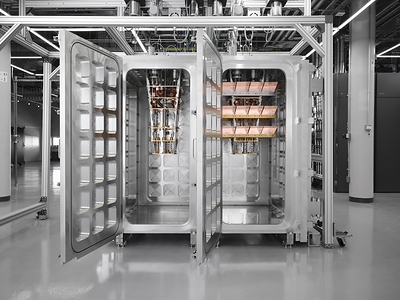
"Advancing to the third stage of DARPA's Quantum Benchmarking Initiative validates the strength of IBM's path to building a fault-tolerant quantum computer," said Jay Gambetta, Director of IBM Research and IBM Fellow. "IBM expects to deliver the first fault-tolerant system in 2029, and we plan to scale the value of quantum computing well beyond that timeline. We look forward to working with DARPA's team of experts as they advance their review of approaches to fault-tolerant quantum computing into the testing phase."
As an independent research and development arm of the U.S. Department of Defense, DARPA launched the QBI in 2024 to determine whether an industrially useful fault-tolerant quantum computer can be built by 2033. The program defines such a system as one whose computational value will exceed its cost. IBM has successfully progressed through the QBI's assessment process, including the first two stages that analyzed comprehensive R&D plans and risk mitigation approaches.
IBM has built the strongest quantum foundation in the industry, anchored by the largest fleet of quantum computers across the globe and Qiskit, the world's most popular quantum software. IBM's quantum computers are already being used today as scientific tools by a network of more than 340 organizations across financial services, healthcare, materials science, academia, and government as they build industrial applications and pursue algorithms to unlock the full potential of fault-tolerant quantum computing.
Last year, IBM laid out its plans to deliver the world's first fault-tolerant quantum computer, IBM Quantum Starling. Starling will combine advances in error correction, processor design, systems engineering, and more. Since then, IBM's progression has remained on course, including the demonstration of core hardware components for fault tolerance and breakthroughs in efficient error correction decoding.
Advancing to Stage C
Each successful QBI performer has progressed through three stages of the program thus far:
Alongside its participation in QBI, IBM continues to collaborate with partners across industry, government, and academia to accelerate the timeline toward fault-tolerant quantum computing.
For more information about the Quantum Benchmarking Initiative, visit the DARPA website.
About IBM
IBM is a leading global hybrid cloud and AI, and business services provider, helping clients in more than 175 countries capitalize on insights from their data, streamline business processes, reduce costs and gain the competitive edge in their industries. Thousands of governments and corporate entities in critical infrastructure areas such as financial services, telecommunications and healthcare rely on IBM's hybrid cloud platform and Red Hat OpenShift to affect their digital transformations quickly, efficiently and securely. IBM's breakthrough innovations in AI, quantum computing, industry-specific cloud solutions and business services deliver open and flexible options to our clients. All of this is backed by IBM's legendary commitment to trust, transparency, responsibility, inclusivity and service.
For more information, visit https://research.ibm.com.
Media contacts:
Erin Angelini
IBM
edlehr@us.ibm.com
Chris Nay
IBM
cnay@us.ibm.com

 View original content to download multimedia:https://www.prnewswire.co.uk/news-releases/ibm-advances-to-stage-c-of-darpa-quantum-benchmarking-initiative-302901682.html

Beim Winterthurer Textilmaschinenhersteller Rieter kommt es zu einem abrupten Führungswechsel. CEO und Verwaltungsratspräsident Thomas Oetterli gibt beide Ämter per Ende Oktober ab. An die Spitze der Geschäftsführung rückt Anfang November der Branchenkenner Daniel Lippuner, während Carl Illi mit sofortiger Wirkung das Präsidium des Verwaltungsrats übernimmt. Rieter begründet den Schritt damit, dass nach der Umsetzung zentraler strategischer Projekte nun der Zeitpunkt gekommen sei, die Verantwortung in neue Hände zu legen.
Lippuner gilt als ausgewiesener Experte für Spinnmaschinen, Garnverarbeitung und Textilkomponenten. Er leitete früher den Textilmaschinenhersteller Saurer und zuvor den Bereich Oerlikon Textile Components. Zudem ist er Verwaltungsratspräsident und Miteigentümer von Heberlein Technology und damit weiterhin eng in der Chemiefaserindustrie verankert. Illi gehört dem Rieter-Verwaltungsrat seit 2017 an und wird vom Unternehmen ebenfalls als Textilexperte charakterisiert. Er soll das Präsidium mindestens bis zur nächsten Generalversammlung führen.
Oetterli, Jahrgang 1969 und früher Chef des Lift- und Rolltreppenherstellers Schindler, war im März 2023 zu Rieter geholt worden, um den bereits damals kriselnden Maschinenbauer zu stabilisieren. Noch im selben Jahr lancierte er das Performance-Programm «Next Level», das ein massives Kostensenkungs- und Restrukturierungspaket umfasst. Der Plan sah unter anderem vor, bis 2025 rund 1400 Vollzeitstellen vorwiegend in Deutschland, der Schweiz und weiteren europäischen Ländern abzubauen und Standorte zu konsolidieren. Parallel dazu übernahm Rieter im Februar die Textilmaschinensparte Barmag von OC Oerlikon, was mit einem deutlichen Anstieg der Verschuldung einherging.
Trotz dieser einschneidenden Massnahmen blieb die erhoffte Trendwende aus. Die Amtszeit Oetterlis war von einem ausserordentlich schwachen Marktumfeld mit anhaltender Nachfrageschwäche geprägt. 2024 hatte er zusätzlich das Präsidium des Verwaltungsrats übernommen – ein Doppelmandat, das den Aktionären ursprünglich als Übergangslösung zur konsequenten Umsetzung von «Next Level» verkauft worden war. Grösster Anteilseigner bei Rieter ist der Schweizer Industrielle Peter Spuhler mit einem Anteil von 33,1 Prozent; er sitzt ebenfalls im Verwaltungsrat. Der Führungswechsel in Winterthur folgt zeitlich auf eine ebenfalls angekündigte Neubesetzung an der Spitze von Stadler Rail, einem weiteren Unternehmen, an dem Spuhler die Kontrolle hält.