BEIJING, July 16, 2026 /PRNewswire/ -- JA Solar has reached a significant milestone in its cooperation with Masdar, with the successful shipment of the first batch of PV modules to the landmark Round-the Clock (RTC) project in Abu Dhabi in July 2026.
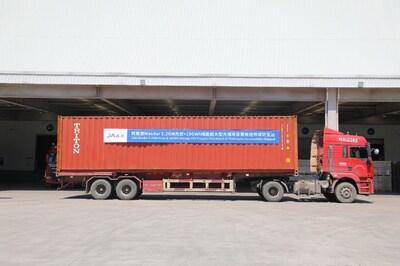
Following its selection in 2025 as one of the preferred suppliers for a 3GW module supply order, JA Solar is set to play an important role in supporting one of Abu Dhabi's major renewable energy projects. The project also demonstrates that JA Solar's product solutions have become a preferred choice for green power supply in AI computing, earning recognition from world-class AI energy projects.
Located in the Al Dhafra area of Abu Dhabi, the RTC solar-plus-storage project is designed to deliver 24/7 clean power through an integrated renewable energy and storage system. Combining a 5.2 gigawatt solar photovoltaic (PV) facility, integrated with a massive 19 gigawatt-hour (GWh) battery storage system, this will be the largest and most technologically advanced solar-plus-storage project on the planet, providing 1GW of baseload power on daily basis.
It is expected to be fully operational in 2027, with its electricity dedicated to powering the increase in energy demand driven by economic growth and new AI infrastructure.
JA Solar's role in the project reflects the company's growing recognition in global markets, supported by its global operations, reliable delivery capabilities and localized service network. The project also positions JA Solar's flagship DeepBlue modules as a trusted solution for large-scale renewable energy projects and energy infrastructure built around the needs of AI computing.
Designed for demanding energy applications, DeepBlue modules are well suited to the power requirements of AI infrastructure. They address the core requirements of AI data center energy projects, including continuous high-load operation, resilience in extreme climates, stringent safety standards, lower maintenance needs and large-scale deployment.
As global demand for computing power continues to climb, AI data centers are becoming an increasingly important source of electricity consumption in the digital age. JA Solar has remained closely engaged with the development of the AI computing industry. During Intersolar Europe 2026 in Munich, the company and Deloitte jointly released the white paper Driving Greener Artificial Intelligence with the Green Token Indicator. The paper introduced green attributes into units of AI computation, marking a shift from green electricity to greener computing. It also proposed a measurable framework for assessing and managing AI's environmental impact.
From supporting reliable gigawatt-scale supplies of clean power to helping shape measurable standards for green computing, JA Solar is linking the development of photovoltaic technology more closely with the future of the AI industry. Through continuously upgraded product solutions and forward-looking industry insights, the company is helping build a clean-energy foundation for AI-driven growth.
Contact: marketing@jasolar.com
Photo - https://mma.prnewswire.com/media/3006351/for_PR_NEWSWIRE.jpg
 View original content:https://www.prnewswire.co.uk/news-releases/ja-solar-begins-module-deliveries-for-masdars-world-first-247-gigascale-clean-energy-project-302827418.html

Bystronic hat seine Erwartungen für das laufende Geschäftsjahr 2026 nach unten angepasst. Der Hersteller von Maschinen für die Blechbearbeitung rechnet zwar weiterhin mit einem höheren Nettoumsatz als im Vorjahr, erwartet jedoch keine Verbesserung der Profitabilität mehr. Bereits im zweiten Quartal 2026 dürften Auftragseingang, Nettoumsatz und Ergebnis unter den bisherigen Annahmen liegen, obwohl sie gegenüber dem ersten Quartal zulegen sollen.
Das Management verweist auf anhaltend schwierige Marktbedingungen im Kerngeschäft. Während die Nachfrage nach Biegelösungen stabil bleibt, leidet das Lasergeschäft weiter unter einer schwachen Marktlage. Geringere Kapazitätsauslastung und Preisdruck im Verkauf von Einzelmaschinen wirken zusätzlich auf die Marge. Hinzu kommt, dass der Trend zu stärker automatisierten Lösungen zwar den Auftragsbestand stützt, die Projekte jedoch längere Laufzeiten haben und sich der hohe Auftragsbestand dadurch langsamer in Nettoumsätze umwandelt.
Einen Lichtblick liefert die neu geschaffene Geschäftseinheit Bystronic Rofin. Sie trägt nach Unternehmensangaben weiterhin positiv zum Konzernergebnis bei, gestützt von einer robusten Nachfrage nach Anwendungen im Halbleiterbereich. Dieser Bereich soll auch dazu beitragen, dass der Konzernumsatz 2026 insgesamt über dem Niveau des Vorjahres liegt, auch wenn die Ergebnisqualität im Vergleich zu 2025 zurückbleiben dürfte.
Konkrete Zahlen zu Auftragseingang, Umsatz und Ergebnis nannte Bystronic bislang nicht. Ausführlichere Informationen zur Geschäftsentwicklung und zum weiteren Ausblick will das Unternehmen mit dem Halbjahresbericht vorlegen, der am 23. Juli veröffentlicht werden soll. Dann dürfte sich zeigen, in welchem Ausmass der Druck im Lasergeschäft und die Verzögerungen bei Automationsprojekten auf die Jahresziele durchschlagen – und wie stark Bystronic Rofin diese Effekte im laufenden Jahr abfedern kann.