SHANGHAI, Aug. 20, 2026 /PRNewswire/ -- JCET Group (SSE: 600584), a leading global provider of integrated circuit (IC) back-end manufacturing and technology services, today announced its financial results for the first half of 2026.
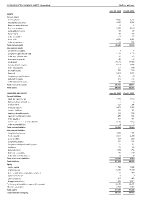
Revenue for the first six months of 2026 reached RMB 19.53 billion, an increase of 5.0% year over year and a record for any first-half period in the company's history. Net profit attributable to shareholders totaled RMB 840 million, up 79.4% from the prior-year period, while adjusted net profit attributable to shareholders, excluding non-recurring items, increased 84.7% year over year to RMB 810 million, reflecting stronger operating performance and improved profitability across the business.
For the second quarter, revenue rose to RMB 10.36 billion, increasing 11.7% year over year and 12.9% sequentially to a record level for the period. Net profit attributable to shareholders reached RMB 550 million, representing growth of 107.3% from a year earlier and 91% from the previous quarter.
Growth during the first half was driven by robust demand from artificial intelligence infrastructure markets, which continued to support recovery across the semiconductor industry. Benefiting from increasing customer orders and higher factory utilization across its global manufacturing network, JCET delivered broad-based growth across key end markets and service offerings.
As AI deployment accelerates worldwide, demand is expanding across the entire infrastructure stack, including computing, memory, interconnect and power delivery. Leveraging its comprehensive portfolio of heterogeneous integration technologies and manufacturing capabilities, JCET continued to strengthen solutions that enable higher performance, greater integration and improved energy efficiency for next-generation AI systems. Revenue from the company's computing electronics business increased 40.4% year over year in the first half. Automotive electronics revenue also continued to grow, rising 25.0%, while testing services recorded revenue growth of 9.4%. The ongoing optimization of JCET's diversified business portfolio contributed to both top-line expansion and stronger earnings performance.
To support long-term growth, JCET continued to invest in technology innovation and manufacturing capacity while advancing both leading-edge packaging and next-generation mainstream packaging solutions. Research and development expenses totaled RMB 1.03 billion during the first half, representing 5.3% of revenue.
In June, the company announced a RMB 7.8 billion investment to build a new advanced packaging and testing manufacturing facility in Shanghai. In July, JCET established a wholly owned subsidiary with registered capital of RMB 4 billion to support project implementation, marking another important step in expanding its high-end advanced packaging footprint.
JCET also continued to enhance operational efficiency through disciplined cost management and productivity improvement initiatives, supporting further margin expansion. In addition, the company established an overseas Finance and Treasury Centre in Singapore, enabling a more centralized approach to global treasury operations, strengthening risk management capabilities and enhancing the resilience of its worldwide operating platform.
Mr. Li Zheng, CEO of JCET Group said, "AI is reshaping both computing infrastructure and semiconductor architectures, while expanding the role of advanced packaging from manufacturing execution to product innovation and system-level performance enablement. Against this backdrop, JCET continued to capitalize on opportunities across the AI value chain during the first half of 2026, supported by our global R&D, manufacturing and customer service network. We further strengthened our technology and product portfolio in key growth areas, driving continued improvement in both scale and profitability. Looking ahead, we will continue to support our customers' innovation with differentiated semiconductor manufacturing solutions and deliver sustainable, high-quality growth."
For more information, please refer to the JCET 2026 H1 Report
About JCET Group
JCET Group is a global leader in integrated circuit back-end manufacturing and technology services. We provide comprehensive turnkey solutions, including semiconductor package integration design, wafer probing, bumping, assembly, final testing, and global drop shipments.
Utilizing advanced wafer-level packaging, 2.5D/3D packaging, System-in-Package solutions, and reliable flip chip and wire bonding technologies, we support a wide range of applications, including automotive, artificial intelligence, high-performance computing, storage, communication, smart devices, industrial and medical sectors, and power and energy. With eight manufacturing facilities across China, Korea, and Singapore, we deliver efficient supply chain solutions and maintain close collaboration with our global customers.

 View original content to download multimedia:https://www.prnewswire.co.uk/news-releases/jcet-reports-79-4-yoy-growth-in-h1-2026-net-profit-attributable-to-shareholders-accelerates-advanced-packaging-expansion-302856599.html

Die Schweizer Stimmberechtigten haben einer Verschärfung des Zivildienstgesetzes zugestimmt. Laut definitiven Ergebnissen votierten 52,5 Prozent für die Reform, rund 47,5 Prozent dagegen. Damit setzte sich der Kurs von Bundesrat und Parlament durch, den Zivildienst wieder klar als Ausnahme und nicht als gleichwertige Alternative zum obligatorischen Militärdienst zu definieren. Die Stimmbeteiligung lag mit rund 58 Prozent vergleichsweise hoch; 1'690'343 Personen legten ein Ja in die Urne, 1'531'878 stimmten Nein.
Das Ergebnis offenbart deutliche regionale Bruchlinien. Während viele deutschsprachige Kantone die Reform klar unterstützten – etwa Aargau mit 56,2 Prozent, St. Gallen mit 58,9 Prozent, Graubünden mit 59,3 Prozent und Luzern mit 56,9 Prozent Ja – fiel das Verdikt in der Romandie gespalten aus. Genf, Waadt, Neuenburg und Jura lehnten die Vorlage ab, mit Nein-Anteilen von bis zu gut 60 Prozent im Jura. Basel-Stadt stellte sich ebenfalls gegen die Verschärfung, und der Kanton Zürich kippte nach Auszählung der städtischen Stimmen knapp ins Nein-Lager. Demgegenüber sagten Wallis (57,1 Prozent), Freiburg (50,2 Prozent) und das Tessin (53,9 Prozent) Ja zur Reform.
Kern der Vorlage ist ein Paket von sechs Massnahmen, die den Wechsel aus der Armee in den Zivildienst deutlich unattraktiver machen sollen. Künftig müssen alle, die in den Zivildienst wechseln, mindestens 150 Diensttage leisten – unabhängig davon, wie viele Tage im Militär noch offen wären. Für Unteroffiziere und Offiziere gilt damit neu derselbe Umrechnungsfaktor von 1,5 Zivildiensttagen pro verbleibendem Militärdiensttag wie für einfache Soldaten. Wer alle Armee-Ausbildungstage bereits absolviert hat, kann künftig nicht mehr in den Zivildienst wechseln, um der Schiesspflicht zu entgehen.
Zusätzlich werden der zeitliche Rahmen und die Einsatzmöglichkeiten enger gezogen. Zivildienstleistende müssen ab dem Jahr nach ihrem ersten Einsatz jährlich Dienst leisten, bis alle vorgeschriebenen Tage erfüllt sind. Wer vor oder während der Rekrutenschule ein Gesuch stellt, muss den langen Anfangseinsatz von 180 Tagen bereits im Jahr nach der Zulassung absolvieren. Einsätze, die ein begonnenes Medizinstudium voraussetzen, werden gestrichen – offiziell, weil der Armee medizinisches Personal fehlt. Bürgerliche Parteien werteten das Ja als Bestätigung, dass der Zivildienst eine Ausnahme bleiben solle; die links-grüne Nein-Allianz verweist angesichts des knappen Resultats auf die breite gesellschaftliche Unterstützung für den Zivildienst und kündigt an, weitere Verschärfungen bekämpfen zu wollen.